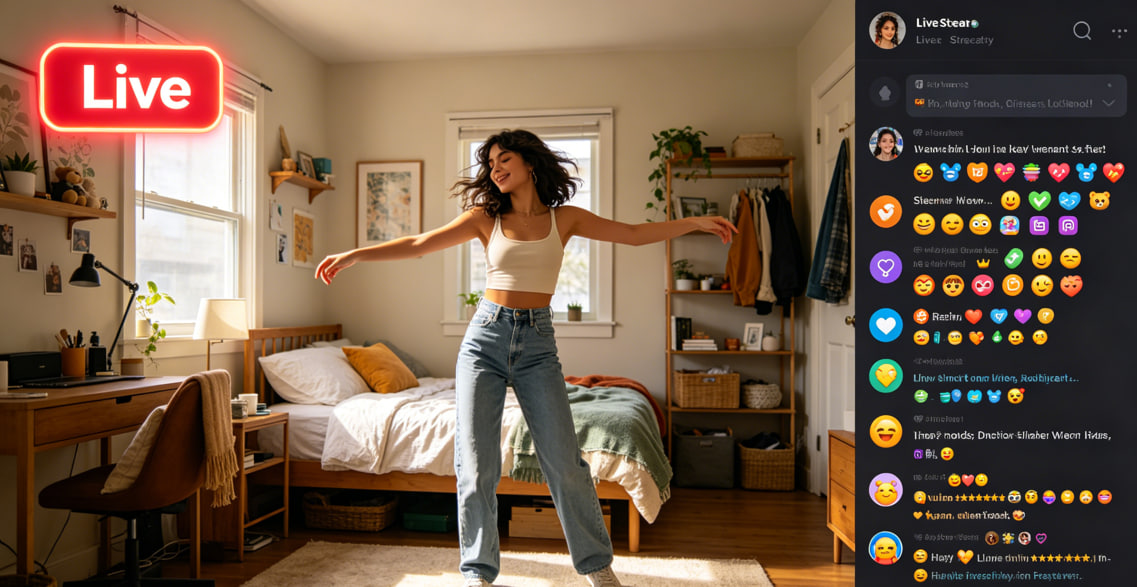
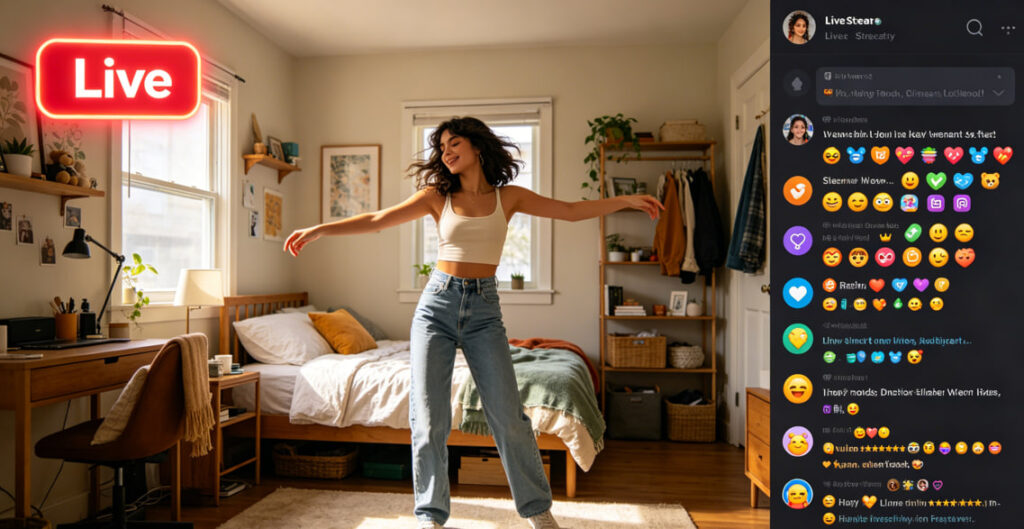
We live in an age of performance without walls. Last Tuesday, at 11 p.m., I found myself watching a young woman dance alone in her bedroom – not through a theatre window, but through a live stream on a platform called Twitch. Her name is Maya, known online as @maya_moves. She was not a professional dancer, at least not by traditional standards. Her studio was a cramped room with fairy lights tangled on the walls, a cracked mirror, and a laundry basket half‑full of clothes. She had sixty‑three viewers, including me. For forty‑five minutes, she danced without talking, without music at times, and without any promise of perfection. It was the most honest performance I have seen in years.
The Video: Dance Without a Net
Unlike a produced dance video, a live stream has no edits, no retakes, no safety net. Maya began her stream by adjusting her phone on a tripod, muttering under her breath about the angle. She pressed a button, and a red “LIVE” indicator appeared. For the first thirty seconds, she just looked at herself in the phone’s preview, fixing her hair. Then she stepped back, took a breath, and started to move.
Her dance was not choreographed in advance. She moved to a lo‑fi hip‑hop beat playing from her laptop. Her style was a hybrid – some hip‑hop isolations, some contemporary floorwork, some gestures that seemed completely improvised. What made it compelling was not the quality of the movement, but the risk of it. In a pre‑recorded video, a dancer can try a move twenty times and upload the best take. In a live stream, when Maya attempted a headstand and wobbled, almost knocking over her lamp, the wobble stayed. She laughed, said “Oops” to the camera, and tried again.
The chat on the right side of the screen moved constantly. Viewers typed encouragement: “🔥🔥”, “you got this”, “that spin was sick”. Maya glanced at the chat between phrases of movement. At one point, someone requested a specific song. She nodded, walked to her laptop, and changed the track – a slow, sad piano piece. Then she sat on the floor and began a completely different kind of dance: small, introspective movements, her hands tracing shapes on the carpet as if drawing memories. The chat went quiet. Fifty people watched a girl trace invisible circles on her bedroom floor. No one left.
The Vulnerability of Live Performance
Why would anyone choose to dance live in front of strangers? For Maya, as she explained in a later stream, it was partly about accountability. “If I record a video, I can always delete it,” she said. “But when I go live, I have to keep going. It forces me to be honest.” This honesty is the opposite of the curated perfection we see on Instagram and TikTok. On those platforms, dance is often reduced to fifteen‑second clips, filtered and edited until every angle is flawless. Live streaming strips away those layers. The viewer sees the dancer before she is ready – fixing her hair, adjusting her shirt, taking a deep breath. The viewer also sees the dancer after the dance: sweaty, tired, sometimes frustrated, sometimes glowing.
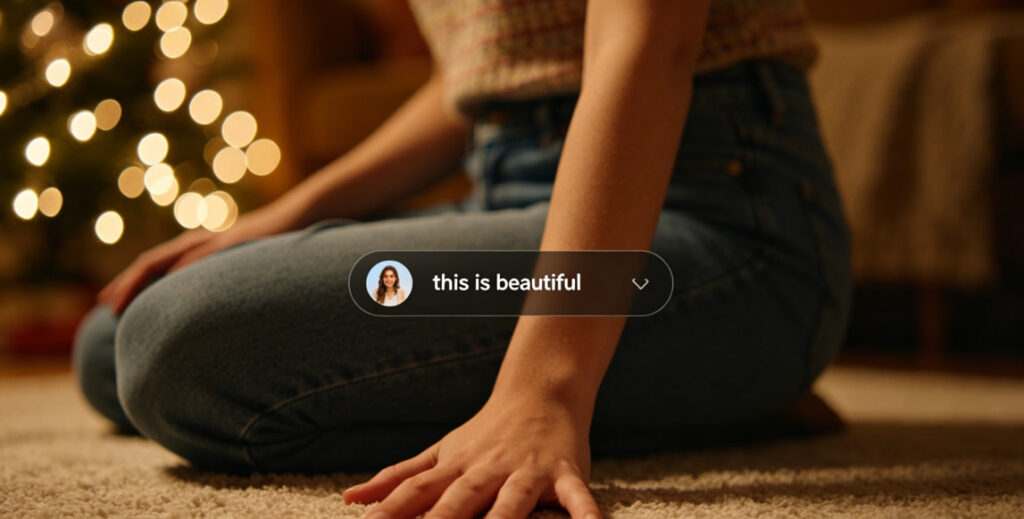
I found myself thinking about the ancient roots of dance. Before there were theatres, stages, or recording devices, dance was always live. It happened around campfires, in village squares, during rituals that required the presence of the community. The dancer and the audience breathed the same air. There was no separation. Live streaming, in its strange digital way, recreates that immediacy. The chat becomes the village circle. The emojis become the claps and shouts. And when Maya falls out of a turn and bursts out laughing, the chat laughs with her. It is not a polished product; it is a shared moment.
Personal Reflections: The Courage to Be Seen
As I watched Maya dance, I remembered a night ten years ago. I was at a friend’s wedding. After too much wine, someone pushed me onto the dance floor. I cannot dance – or rather, I believed I could not dance. My body felt stiff, my arms like planks, my feet unsure where to land. But the music was loud, the lights were low, and everyone else was moving badly too. For three songs, I forgot to be embarrassed. I jumped, spun, pointed at the ceiling, and even attempted a move I had seen in a music video. It was terrible. And it was glorious.
That night, I was dancing live in front of an audience of about fifty drunk relatives and friends. No one judged me. Or if they did, I could not hear them over the music. The next morning, I felt a strange pride – not because I had danced well, but because I had danced anyway. Maya’s live stream brought back that feeling. Her wobbles, her off‑beat moments, her occasional pauses to check her phone – these were not failures. They were proof of presence. She was there, in her messy bedroom, offering movement to anyone who cared to watch.
The Audience as Co‑Creator
One of the most fascinating aspects of live‑streamed dance is the role of the audience. In a traditional performance, the audience watches silently and applauds at the end. In a live stream, the audience talks back in real time. During Maya’s stream, someone typed “do a floor slide”. Maya saw it, shrugged, and attempted a slide across her carpet. She did not slide far – the carpet was too grippy – but she ended up in a sprawl, giggling. The chat exploded with laughing emojis. Another viewer asked her to repeat a specific arm gesture she had done earlier. She paused, rewound her own mental recording, and repeated it, slower this time, explaining what muscle groups she was using.
This back‑and‑forth transforms the dance. It is no longer a monologue from the dancer to the audience; it is a conversation. The audience’s suggestions become part of the choreography. The dancer’s reactions become part of the performance. The boundaries blur. Is Maya dancing for herself? For the chat? For the recording that will live on her channel afterward? Probably all three. And that multiplicity is exactly what makes live streaming a unique art form.
I also noticed the silence. At several points, Maya stopped moving entirely. She just stood still, breathing, looking at the chat. The chat was quiet too. No one typed anything for ten, fifteen seconds. In those pauses, the tension was palpable. What would she do next? Would she continue? Would she end the stream? The silence became a part of the dance – a rest note in the music of presence.
Why Live Dance Matters Now
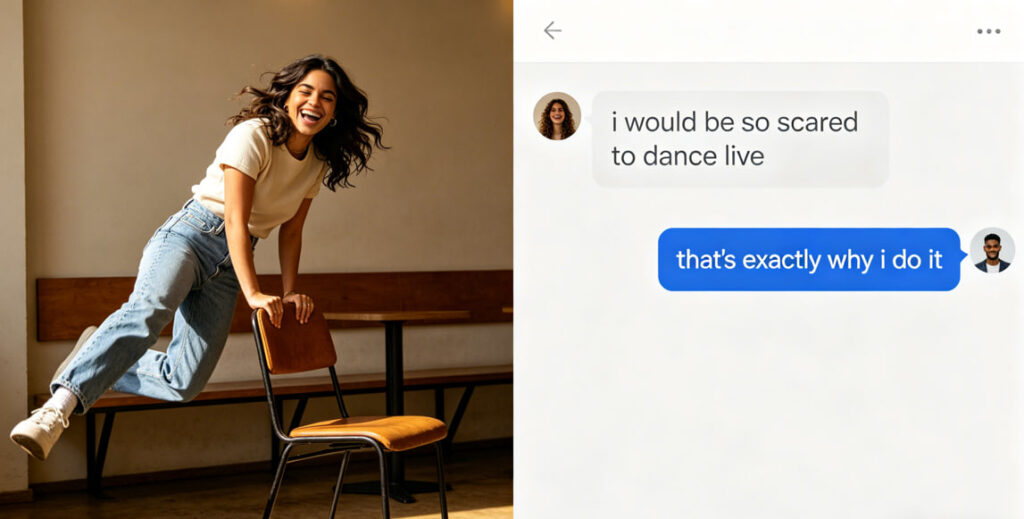
In a world of pre‑recorded perfection, live streaming offers something rare: imperfection as authenticity. Maya’s dance was not the best dance I have ever seen. Her technique was rough, her transitions were messy, and her bedroom was distracting. But I watched the entire forty‑five minutes without looking away. Why? Because I was watching a real person take a real risk. Every time she tried a new move, she risked falling. Every time she looked at the chat, she risked judgment. Every time she kept dancing despite the wobbles, she demonstrated a quiet kind of courage.
I think about all the people who never dance because they are afraid of looking foolish. I think about the thousands of hours of dance videos that are filmed and then deleted because the dancer spotted one imperfection. Live streaming is an antidote to that fear. It says: You do not have to be perfect to be worth watching. You just have to be present.
After the stream ended, Maya waved to the camera, said “Good night, everybody”, and clicked “Stop Streaming”. The screen went black. The chat filled with final messages: “great stream”, “thank you”, “you inspired me”. I closed my laptop and sat in the dark. My own body felt different – less frozen, more alive. I stood up, walked to the middle of my living room, and put on a song. No one was watching. But I moved anyway. Just a little. Just for myself.
Conclusion: An Invitation to Go Live
If you have ever wanted to dance but felt too self‑conscious, consider this an invitation. You do not need a studio, a costume, or choreography. You need only a phone, an internet connection, and the willingness to be seen as you are – imperfect, real, and moving. Your audience might be one person or a hundred. It does not matter. What matters is the act itself: the decision to show up, to risk falling, to let your body speak in real time.
Maya’s live stream taught me that dance is not about the final product. It is about the moment – the breath, the wobble, the laugh, the recovery. In those moments, we are not performers. We are simply humans, reminding each other that movement is our first language, and that we are all, always, dancing.
End of article.
Note: To complete this post, insert 3–4 images matching the descriptions in brackets. Suggested sources: screenshots of live dance streams from platforms like Twitch, Instagram Live, or TikTok Live (with permission); or royalty‑free images of people dancing in home settings (e.g., Pexels, Unsplash). Always credit the streamer if using a real person’s image.