There is a moment in every great dance video when words fall silent, and the body becomes the only truth. I recently stumbled upon a short film on YouTube titled “Grounded” – a contemporary dance piece filmed in the abandoned salt flats of Bolivia. No dialogue, no voiceover. Just a single dancer, the vast white desert, and a haunting cello melody. Within the first thirty seconds, I was no longer watching a performance; I was feeling a story that my own tongue could never tell.
The Video: A Dance of Elements
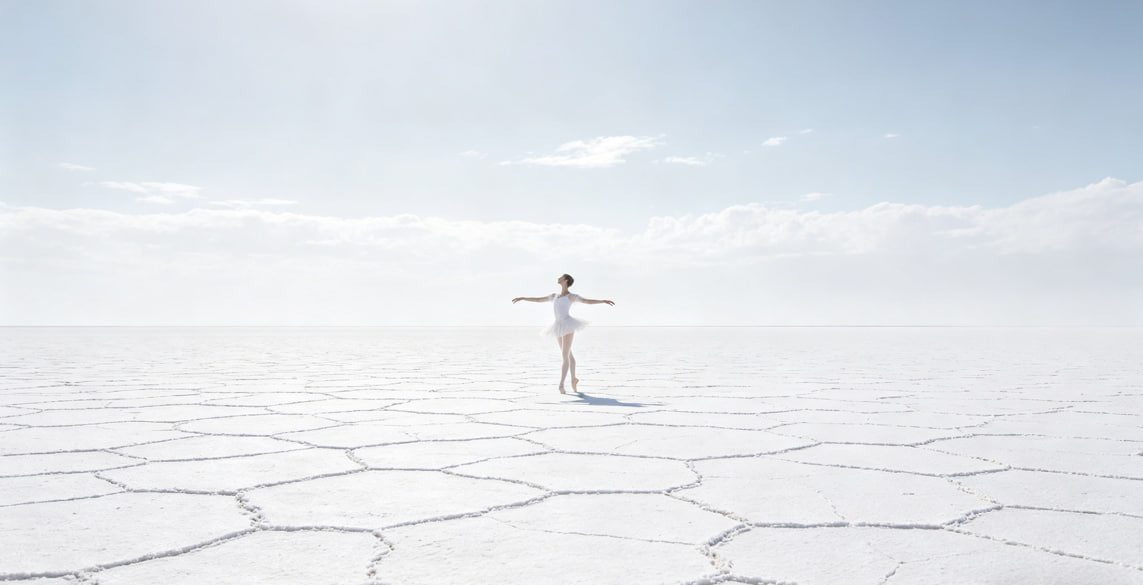
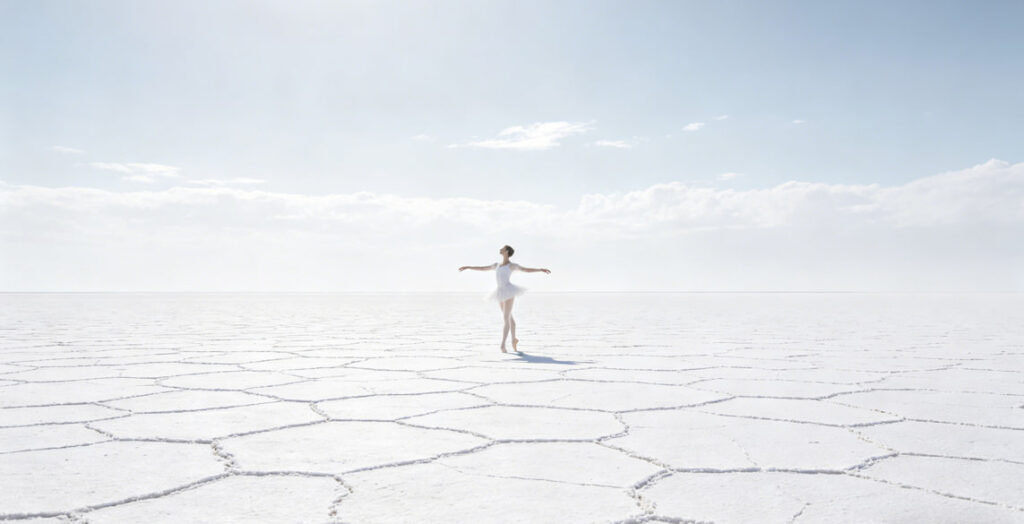
The video opens with a wide shot. The dancer, a woman in a simple earth‑coloured dress, stands motionless on the geometric puzzle of dried salt polygons. The camera slowly zooms in as the cello begins – a low, yearning note that seems to rise from the ground itself. Her first movement is almost imperceptible: a slight tilt of the head, as if listening to something far away. Then her right hand lifts, fingers trembling like a flame in wind.
What makes this video extraordinary is the synergy between the dancer and the landscape. When she extends her arms horizontally, the camera pulls back to show the endless white plain – she becomes a tiny punctuation mark on nature’s vast page. A sudden gust of wind blows her hair across her face, and instead of fighting it, she leans into the gust, letting it spin her around. The choreography feels improvised, yet every gesture is intentional.
At the 1:47 mark, she drops to her knees. Her hands press into the salt crust, and she drags them forward, carving two shallow lines. Her face, finally shown in close‑up, is not the serene mask of a ballerina. It is raw – eyes closed, mouth slightly open, as if she is both praying and screaming. The cello swells into a dissonant chord, then breaks into a pizzicato rhythm that mimics a heartbeat.
What the Body Says When the Tongue Is Silent
We often think of dance as entertainment, but videos like “Grounded” remind me that movement is our oldest language – older than spoken words, older than written symbols. Before we had nouns and verbs, we had pointing fingers, stamping feet, arched backs, and bowed heads. The dancer in this video is not performing for an audience; she is communicating with the earth, with the wind, with an inner storm that cannot be named.
As I watch her rise from her knees and begin a slow, spiraling ascent – arms unwinding like a flower blooming in reverse – I find myself thinking about times in my own life when I have been unable to speak. Grief, for example, has no proper vocabulary. When my grandmother died, I sat in a chair for three hours, unable to produce a single sentence. But my hands kept moving: twisting a napkin, tapping the armrest, folding and unfolding. In retrospect, those small, repetitive movements were a kind of dance. They were my body’s attempt to process what my mind refused to say.
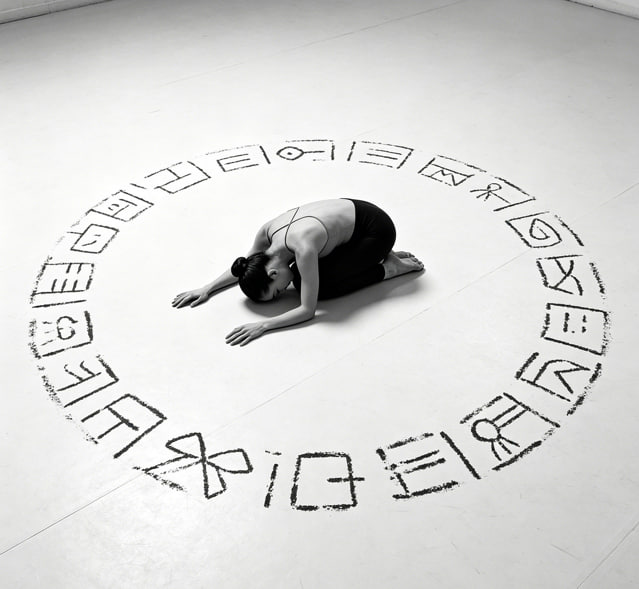
The dancer falls again – this time onto her side, curling into a fetal position. Her legs scissor slowly, as if she is trying to walk while lying down. It is a heartbreaking image: the urge to move forward trapped inside a body that has temporarily given up. Then, just as the cello reaches its lowest note, she pushes up onto all fours and crawls – not backward or forward, but in a wide circle. She draws a ring in the salt with her knees. A ritual. A boundary. A safe space.
From Observation to Empathy: The Power of the Dance Video
Why watch a dance video instead of a live performance? I have thought about this while rewatching “Grounded” for the fourth time. Live dance has its magic – the shared breath of the audience, the risk of a missed leap, the sweat on the dancer’s brow. But a well‑crafted dance video offers something else: intimacy. The camera can move where the audience cannot. It can show a single tear falling onto salt crystals, or the micro‑tremor in a thigh muscle. It can cut from a sweeping landscape shot to a close‑up of an eye, reminding us that the universe exists both outside and inside the dancer.
Moreover, a dance video can be paused, replayed, studied. The first time I watched “Grounded”, I focused on the dancer’s arms. The second time, her feet. The third time, the way the changing light – the sun was setting during the shoot – transformed the salt from white to gold to grey. Each viewing revealed a new layer. This is not passive consumption; it is active interpretation. In that sense, a great dance video becomes a conversation between the choreographer, the dancer, the filmmaker, and the viewer. And the conversation never ends.
Personal Associations: Dancing Through My Own Memories
Halfway through the video, something unexpected happens. The wind stops. The cello falls silent for three full seconds. The dancer stands perfectly still, facing directly into the camera – into me. Her chest heaves from exertion. A strand of hair sticks to her lip. She does not smile or frown. She just breathes. And in that silence, I am suddenly transported back to my childhood bedroom at age twelve.
I was a shy, clumsy boy who had secretly learned a hip‑hop routine from a music video. One afternoon, when no one was home, I pushed the furniture against the walls, turned up the stereo, and danced – really danced – for the first time in my life. I was terrible. My timing was off, my arms were too stiff, I nearly knocked over a lamp. But for three minutes, I felt completely free. My body was not an awkward collection of limbs; it was a voice. When the song ended, I stood in the middle of the room, panting, just like the dancer in “Grounded”. I remember thinking: This is who I really am.
I never became a dancer. Life took me down other roads. But every time I watch a powerful dance video, that twelve‑year‑old boy wakes up inside me. He reminds me that we are all, in some way, dancers – moving through space, leaving invisible traces, trying to be understood without words.
The Choreography of Everyday Life
Perhaps this is the greatest gift of dance videos: they train us to see the choreography in ordinary life. After watching “Grounded”, I went for a walk in my neighbourhood. I noticed a man on a park bench who kept tapping his foot in a syncopated rhythm – maybe anxiety, maybe a song stuck in his head. I saw a mother swinging her toddler by the hands, the child’s legs kicking in a joyful, untaught pattern. I observed a cyclist leaning into a turn, his body a perfect arc against the grey city street.
None of these people were “dancing” in the professional sense. But all of them were using their bodies to express something – restlessness, love, efficiency. Dance, in its broadest definition, is simply intention made visible through movement. And movement is the most honest thing we have. Words can lie. A face can pretend. But the way we hold our shoulders, the way we shift our weight from one foot to the other, the way we reach for something or pull away – that is our autobiography, written in real time.

Conclusion: Why We Need More Dance Videos
In a world that is increasingly verbal, textual, and digital, dance videos offer a return to the primal. They bypass the intellect and speak directly to the gut. “Grounded” is not a tutorial, not a competition piece, not a flashy showreel. It is a meditation – on loneliness, on resilience, on the relationship between a fragile human body and an indifferent planet. And because it is a video, it can reach anyone with an internet connection. A teenager in Mumbai, an elderly woman in Buenos Aires, a tired office worker in London – all of them can sit alone in their rooms and feel what the dancer feels.
That is the quiet revolution of the dance video. It democratizes an art form that was once confined to theatres and elite schools. It allows us to see not just the final, polished performance, but the raw, human process underneath. And most importantly, it reminds us that we, too, are dancers. We move through our lives in ways that are beautiful, awkward, painful, and triumphant. All we need is someone to watch – or, better yet, to join us.
As the credits roll on “Grounded”, the dancer is finally just a tiny figure on the horizon, swallowed by the white expanse. But her movement lingers in my own muscles. I stand up from my chair, stretch my arms above my head, and take a single, slow step to the side. It is not a dance. But it is a beginning.
End of article.
Note: To complete this post, insert 3–4 images that match the descriptions in the brackets. Suggested sources: royalty‑free dance photography (e.g., Pexels, Unsplash) or stills from a public‑domain dance video. Always credit the choreographer and dancer if using specific copyrighted material.