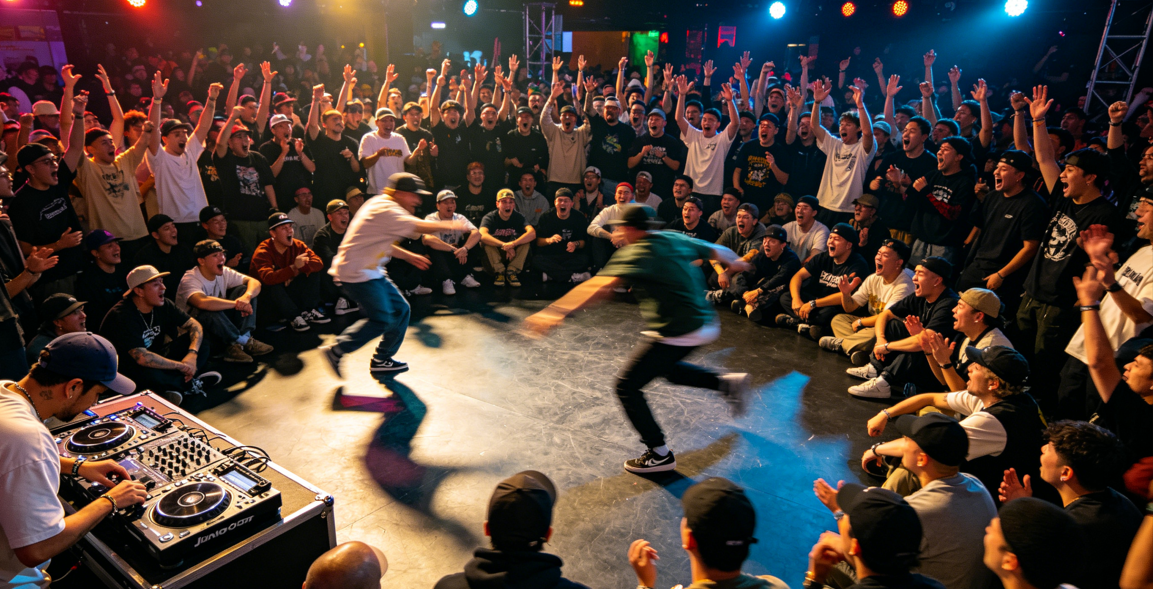
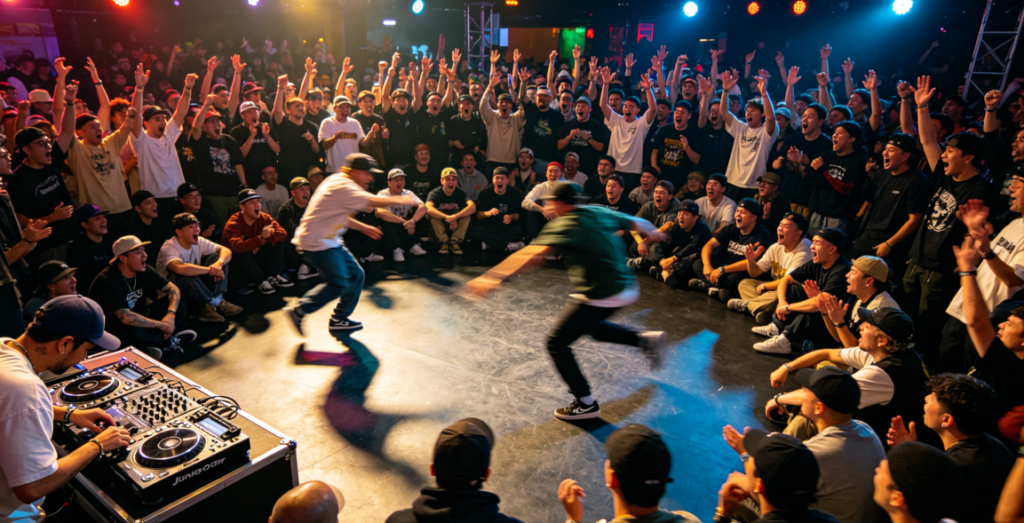
I discovered the video on a slow Tuesday night, buried under algorithm recommendations. It had no professional title – just “Bboy Juno – final round – 2023.” The thumbnail showed a young man in a hoodie, upside down, one hand on the floor, legs spiraling like a compass. I clicked out of boredom. Three minutes later, I was breathless. The video was a recording of a breaking battle in a crowded community centre somewhere in the Bronx. The sound was raw – bass vibrations, sneaker squeaks, the roar of a small crowd. There were no pointe shoes, no tutus, no polite applause. There was only a circle of bodies, a boombox on a folding chair, and a dancer who seemed to bend gravity like a toy. This was street dance. And it was alive.
The Video: A Conversation in Movement
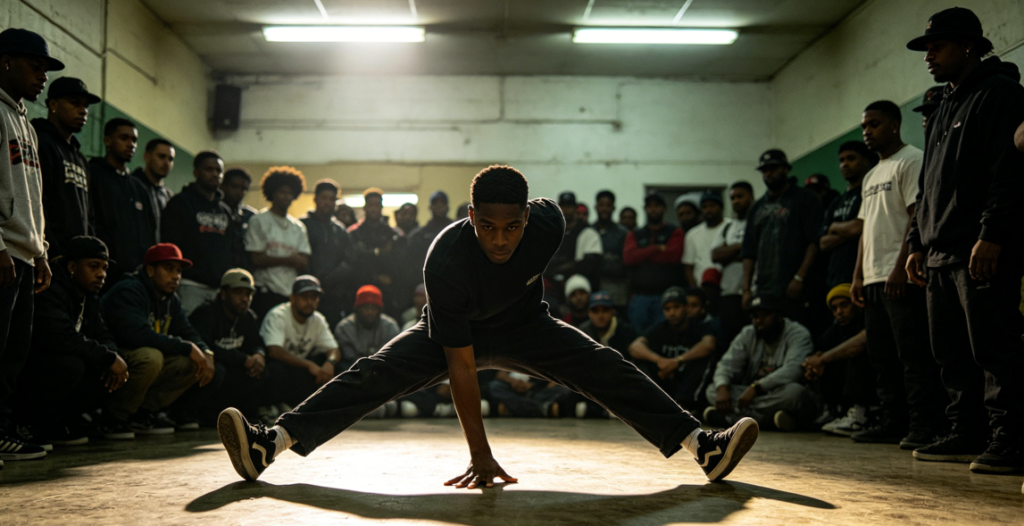
The video begins with two dancers facing each other across a worn linoleum floor. They are not performing choreography; they are battling. The DJ drops a beat – a classic breakbeat with a funky bassline and a snare that snaps like a whip. Bboy Juno, a lanky man in his early twenties, nods to his opponent, then steps into the circle. He starts with toprock – the upright, rhythmic stepping that opens a breaking round. His feet move fast, syncopated, almost casual. He points at the floor, then at his opponent, a smirk on his face. The crowd laughs. The battle has begun.
What strikes me immediately is the conversational nature of the movement. Juno’s toprock is not just a warm‑up; it is a statement. He steps forward, then back, as if testing the space. He rolls his shoulders, flicks his wrists, and drops into a six‑step – a foundational footwork pattern that spins him around the floor like a human cyclone. His opponent watches from the edge, arms crossed, waiting for his turn. Every move Juno makes is a sentence. Every freeze – a sudden, impossible pause – is an exclamation mark.
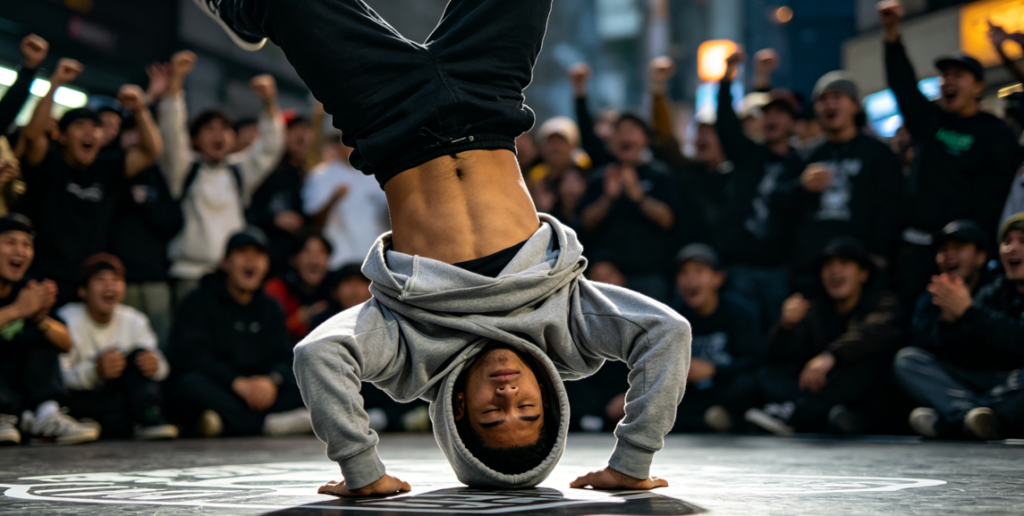
At 0:47, Juno launches into a series of power moves. His legs swing in a wide circle, his hands barely touching the floor. The crowd starts clapping on the beat. He transitions from a windmill into a headspin, his hoodie twisting around his face. For five seconds, he spins on the crown of his head, his body straight as an arrow. Then he stops – abruptly, perfectly – and points at his opponent. The crowd explodes. Someone shouts “Get him!” Juno walks backward out of the circle, breathing hard, his face lit with a mixture of exhaustion and joy.
The opponent enters and answers with his own round – different moves, different rhythm, but the same raw energy. This back‑and‑forth continues for three rounds. No one wins, technically; the video ends before the judges’ decision. But I have already stopped caring about the outcome. The dance itself is the victory.
The Language of the Streets
Breaking – the dance form that exploded out of the Bronx in the 1970s – was never meant for proscenium stages. It was born at block parties, in rec rooms, on cardboard boxes laid over concrete. The pioneers were not trained at conservatories; they were kids who took the rhythms of funk and hip‑hop and translated them into movement. They invented their own vocabulary: toprock, downrock, power moves, freezes. They created a culture based on respect, competition, and creativity. And they did it all without mirrors, without teachers, without permission.
Watching Juno’s battle, I think about the word cypher – the circle of dancers and observers that forms organically at a breaking event. The cypher is not just a performance space; it is a community. Everyone in the circle is participating, whether they are dancing or just watching. The energy flows both ways. When Juno lands a difficult freeze, the crowd’s reaction fuels his next move. When he stumbles – and he does stumble, just once, during a transition – the crowd shouts encouragement instead of laughing. The cypher is a safe space for risk. That is its magic.
I have never been a street dancer. I grew up in a small town where hip‑hop culture arrived late, filtered through music videos and baggy jeans. But watching this video, I feel a pull I cannot explain. There is something liberating about the rawness of breaking – the way dancers use the floor as a partner, the way they turn falls into choreography, the way they sweat and grunt and laugh. It is dance as sport, as art, as conversation. It is the opposite of the sterile, filtered dance clips on social media. It is real.
Personal Reflections: The Cardboard Box in My Garage
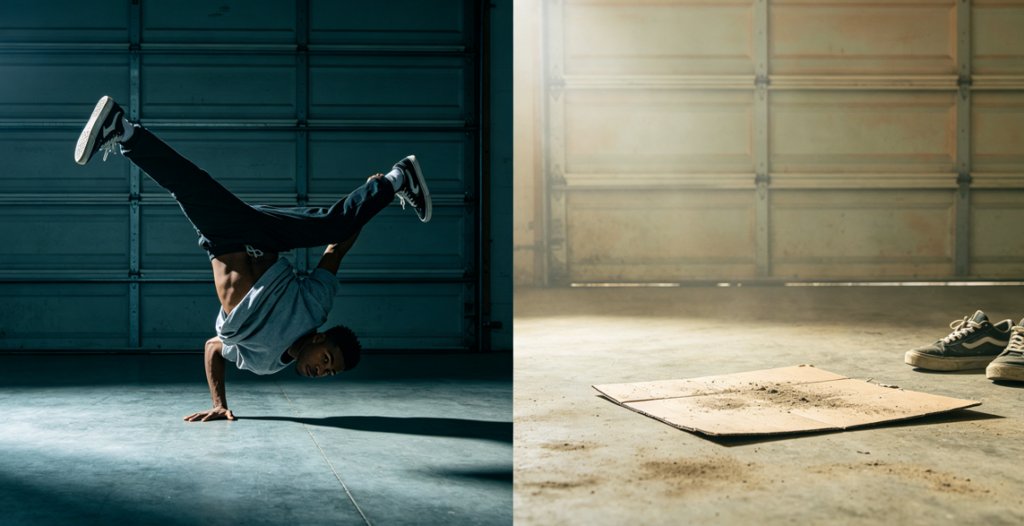
When I was fourteen, I found a VHS tape in a thrift store. It was called “The Freshest Kids” – a documentary about the history of breaking. I watched it alone in my basement, rewinding certain sections again and again. I remember a scene where a dancer named Ken Swift explained the concept of “the set” – a series of moves that form a dancer’s signature. I was mesmerized. That weekend, I dragged a piece of cardboard into my garage, put on a cassette of old school hip‑hop, and tried to mimic the moves I had seen. I was terrible. My footwork was clumsy, my freezes lasted half a second, and I gave myself a rug burn on my elbow. But for an hour, I felt something I had never felt before: the joy of moving without rules.
I never became a breaker. The garage got cold, school got busy, and the cardboard box eventually disintegrated. But that memory stayed with me. Watching Bboy Juno’s video, I am fourteen again, knees scraped, laughing at my own awkwardness. Juno is light‑years ahead of where I ever was, but the feeling is the same: the thrill of discovering what your body can do when you stop being afraid of falling.
Hip‑Hop Dance as Resistance
There is a political dimension to street dance that is easy to overlook when you watch it on a screen. Breaking was born in a time when young people of colour in the South Bronx had few opportunities for self‑expression. The city was burning – literally, with arson‑fueled fires – and the future seemed bleak. But on a boombox and a piece of linoleum, dancers created a world where skill mattered more than money, where creativity was its own reward. Breaking was, and still is, a form of resistance. It says: I am here. I have something to say. And you will watch.
Juno’s video carries that legacy, even if he is not thinking about it consciously. In the background of the battle, I notice the details of the community centre: the scuffed walls, the mismatched chairs, the banner advertising a food bank. This is not a fancy studio. These are not privileged kids. But the dancing is world‑class. The moves that Juno executes – the headspins, the windmills, the intricate footwork – would take years of practice in any setting. He did not have a sprung floor or a full‑length mirror. He had a boombox, a cypher, and the fire inside.
I think about the global spread of hip‑hop dance. Today, breaking is an Olympic sport. Kids in Japan, France, Brazil, and South Korea study the same moves that were invented in the Bronx. The culture has travelled, evolved, and diversified. But the core remains: respect, originality, and the refusal to give up. Watching Juno battle, I see that core burning bright.
The Soundtrack of the Streets
The music in the video is crucial. The DJ plays an old breakbeat – “Apache” by the Incredible Bongo Band, a track that has been a breaking anthem since the 1970s. The rhythm is driving, with a heavy drum break that repeats like a heartbeat. Juno moves inside the beat, not just on top of it. His footwork hits the snare. His freezes punctuate the silence between phrases. When the beat drops out for a moment – a classic DJ trick – Juno continues moving, his body marking the rhythm even when the music is absent. Then the beat returns, and he hits it perfectly. The crowd loses their minds.
This relationship between dancer and DJ is unique to street dance. In ballet, the orchestra plays and the dancer follows. In breaking, the dancer and the DJ are partners, responding to each other in real time. Juno’s round would not work with a different track. He has chosen his moves to fit the specific texture of “Apache” – the way the horns blare, the way the bass thumps, the way the drum break loops. This is not just dancing; it is musical interpretation at the highest level.
Learning to See Street Dance
Before I started watching breaking videos, I did not understand the form. I thought it was just spinning on the floor and looking cool. But Juno’s battle taught me to see the details: the way he uses his hands to push off the floor, the way his eyes track his opponent, the way he varies his speed from slow, controlled footwork to explosive power moves. Every gesture has intent. Every freeze is a challenge.
I have also learned to see the vulnerability. In the third round, Juno attempts a move called a “halo” – a headspin variation where the dancer rolls from one side of the head to the other. He loses momentum halfway through and has to abort. For a split second, his face shows frustration. Then he recovers, transitions into a simple freeze, and ends the round with a shrug. The crowd laughs sympathetically. His opponent nods. The mistake is not a disaster; it is part of the conversation. In street dance, perfection is not the goal. Honesty is.
The Night I Almost Joined a Cypher
Last year, I visited a friend in a big city. We went to a hip‑hop event in a basement club. At one point, the DJ called for an open cypher. Dancers pushed into the circle one by one – some skilled, some beginners, all fearless. My friend nudged me. “Go,” he said. I shook my head. My heart pounded. I remembered the cardboard box in my garage, the clumsy moves, the rug burn. I wanted to step into that circle so badly. But I didn’t. I watched from the edge, cheering for strangers.
Watching Juno’s video now, I regret that night. Not because I would have been good – I would have been terrible – but because I would have been part of something. The cypher is not about being the best dancer. It is about showing up, taking a risk, and adding your voice to the collective rhythm. Juno understands this. That is why he is not afraid to stumble. That is why he keeps dancing.

Conclusion: The Cypher Never Ends
The video of Bboy Juno ends with both dancers in the centre, shaking hands. The crowd applauds. The DJ plays a victory track – something smooth, something celebratory. Juno pulls up his hoodie and walks off camera. The screen fades to black. But I know that the cypher continues somewhere else, in another community centre, another basement, another street corner. That is the beauty of hip‑hop dance. It does not belong to any one person or place. It belongs to anyone who is willing to move.
I have not stepped into a cypher yet. But after watching Juno’s battle, I am closer. I have started practicing toprock in my living room. I have pulled out that old breakbeat playlist. My feet are still clumsy, and my freezes are non‑existent. But I am moving. And that, I have learned, is the first step.